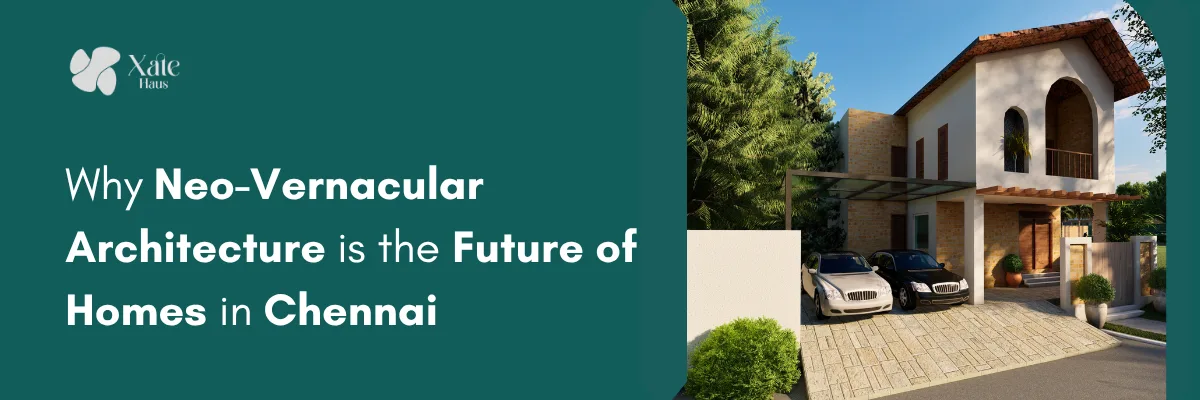

Chennai is a city of resilience. We’ve seen scorching summers, heavy monsoon floods, and crazy cyclones. Sometimes all in the same year! Yet, our people adapt, our culture endures.
While our city evolves, one question always remains: are our homes keeping up with these changes?
As you walk through the bustling lanes of Anna Nagar, Adyar or Injambakkam, you’ll notice something striking. Most houses, whether apartments or independent villas, look eerily similar. Standard floor plans. Globalized interiors. Modern façades that could belong anywhere in the world.
The Story of Vernacular Homes
Not too long ago, our homes breathed with the land. Thick walls kept the interiors cool, courtyards lit up the spaces with natural light, and shaded verandahs became everyday gathering spots.
Vernacular architecture was homes designed by the people, for the people, shaped by local climate, materials, and culture. A Chettinad house was a lifestyle, a cultural signature, and a climate-responsive solution rolled into one.
But here’s the reality: while vernacular architecture solved yesterday’s problems beautifully, it cannot, on its own, meet the needs of our modern lives.
Why Vernacular Alone Doesn’t Fit Today
If vernacular homes were so perfect, why aren’t we still building them everywhere? Three hard truths:
- Our lifestyles have changed. Vernacular homes encouraged minimal living, with open courtyards and farming-linked routines. Today, most of us live more indoor lives, with careers, technology, and nuclear families that demand different spaces.
- Regulations don’t always allow it. Building codes, safety standards, and urban bylaws sometimes make it impractical to construct homes in the exact vernacular way. For example, mud walls or traditional thatch may not meet current approval standards.
- Cost structures are different. Traditional materials for vernacular construction are difficult to source and often come at a much higher price compared to modern alternatives. Families understandably prefer durable, cost-effective blends over going fully traditional.
So yes, vernacular is inspiring. But simply copying an old model into today’s context doesn’t work.
What We’re Really Looking For
When people say they want a “vernacular home,” what they truly mean is:
- A space that feels healthy and breathable, not sealed with synthetic finishes.
- A home that stays naturally cool without huge electricity bills.
- A design that reflects culture and individuality, not cookie-cutter layouts.
And this is where Neo-Vernacular architecture enters the picture.
Neo-Vernacular Architecture – The need of today
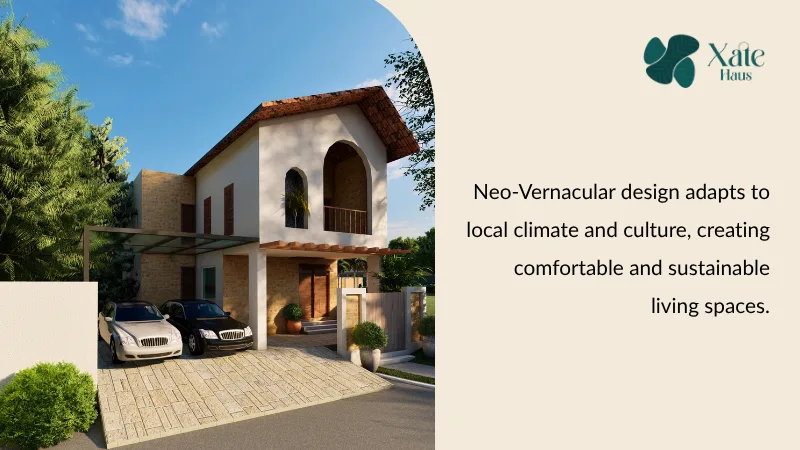
Neo-Vernacular is all about reinterpreting the wisdom of vernacular design while adapting it to today’s time, especially in Chennai’s urban context, materials, and lifestyle.
Here’s how it works:
1. Climate-Responsive Planning
Every design begins with Chennai’s sun path, wind flow, and rainfall patterns. For example:
- Homes in ECR get open sea breezes and layouts are planned to capture that ventilation.
- In dense Anna Nagar, RA Puram, Adyar, courtyards or light wells bring daylight without overheating.
2. Smart Material Palette
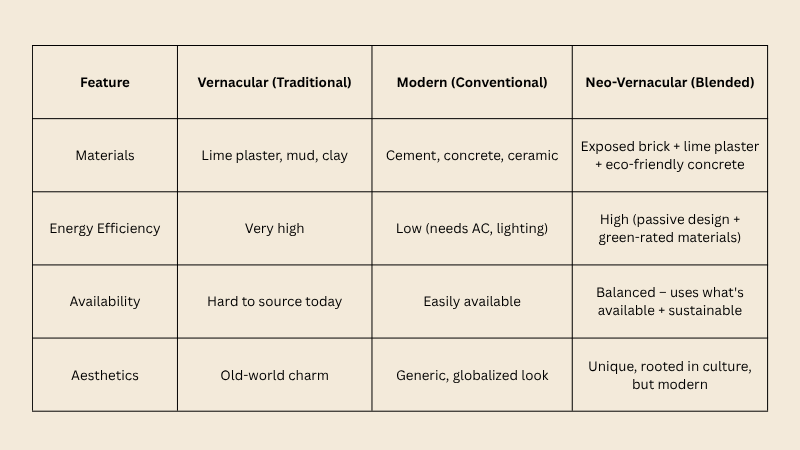
We blend tradition and modernity. Think: exposed brick with fly-ash blocks, lime plaster walls with eco-friendly cement, Athangudi tiles with solar-ready roofs.
3. Personalized Cultural Expression
We at Xate Haus believe that no two homes are the same. A verandah might become a co-working nook in Adyar. A courtyard in an OMR villa could be reimagined as a play space for kids. Each home is rooted in tradition, but shaped for today’s life.
How This Benefits You
Choosing Neo-Vernacular design connects you much stronger to what you believe in and who you are
1. Healthier Living
Using low-VOC (Volatile organic compound) finishes, lime plaster, and breathable walls improves indoor air quality reducing the risk of respiratory issues for your family.
2. Lower Energy Bills
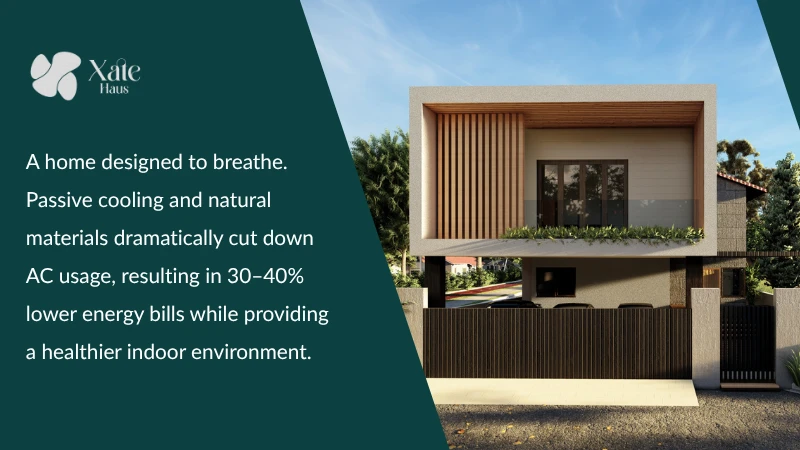
Passive cooling and ventilation cut down on AC usage. A Neo vernacular house reduces cooling costs by 30–40%.
3. Unique Identity
Unlike every other contemporary and run of the mill home design, your home reflects your story, your culture, your lifestyle and defines who you are.
4. Future Resilience
Chennai’s climate extremes are only intensifying. A Neo-Vernacular home will be standing strong through heat, rain, and storms.
Homes designed by Xate Haus, Crafted for You, Rooted in Wisdom
As architects, we at Xate Haus believe every home is a living story. It’s a reflection of your culture and aspirations.
That’s why every home we design is unique. We take the timeless wisdom of vernacular design and reinterpret it for Chennai’s evolving lifestyle. Whether you’re building by the sea in ECR, OMR or in a dense neighbourhood like Anna Nagar, or amidst the calm of RA Puram, your home will be crafted to breathe, adapt, and belong.
Because in the end, a house should not look like anyone else’s. It should tell your story.
👉 Schedule a consultation with us today
FAQs
What is vernacular architecture in Chennai?
Vernacular architecture is traditional building design using local materials and climate-responsive techniques like courtyards, shaded verandahs, and lime plaster.
Can vernacular homes still be built in Chennai?
Yes, but pure vernacular is difficult in urban areas due to material and labour challenges. Neo-Vernacular adapts the principles for today.
What is Neo-Vernacular architecture?
It’s a modern reinterpretation of vernacular design, blending traditional wisdom with modern green-rated materials for contemporary lifestyles.
How does Neo-Vernacular reduce energy bills?
Through passive cooling, ventilation, natural shading, and material choices that keep homes naturally cool.
Who are the best vernacular architects in Chennai?
Xate Haus architecture studio specializes in Neo-Vernacular architecture, designing climate-responsive, personalized homes across Chennai and South India.